Digging before designing? Please, don't.
/
Do you have Pinterest boards or magazine clippings loaded with visions of lush, outdoor oases? When inspired and eager for change, digging first and planning second is tempting. However, the dig-before-design method is the fastest way to frustration and financial barriers. When landscaping a new yard with a complete outdoor transformation in mind, but no design plan on paper, the problems compound.
Starting is the hardest part
Imagine building a house one room at a time with no overall plan. Barring a miracle, and even with the most talented craftspeople, the result would likely be a maze of rooms or a shack-stack..The same applies to an outdoor build. Start with a landscape design to unlock the potential of your yard, achieve your vision and stay on-budget.
DIY Landscape Design workshop
Saturday, April 18, 2026 | 10 a.m. - 12 p.m.

The unique shape of this lot made it a fun challenge to design.
A design plan: the recipe for your yard
Just as you wouldn’t start cooking a five-course meal without a plan, don’t start landscaping without a plan, especially if you are a beginner with good intentions.
A design provides a map to your yard goals. By starting in the planning stage, working and reworking your landscape dream is much easier, (compared to starting with demolition). You may erase and redraw lines repeatedly, but this is much easier and affordable than digging up paving stones or plants.
Get the bird’s-eye view
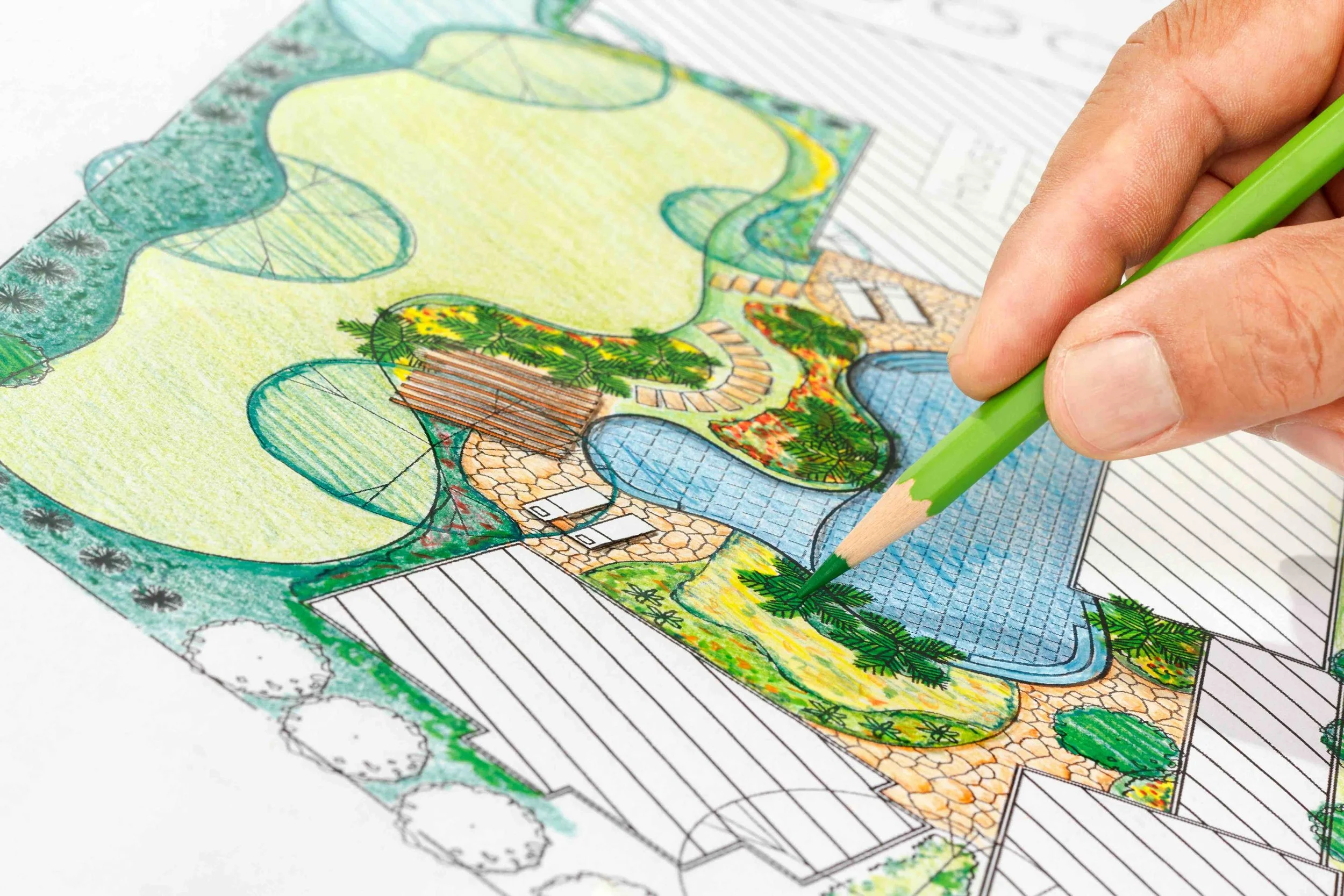
An overhead view to design from gives a unique perspective of your space. but make sure you’re scaling to a correct size. A scale represents actual and available yard space. Without scaling your design properly, you may be disappointed when an element— whether patio furniture, boulders or shrubs, don’t fit into their intended spots.
You’ll also want an overhead view to budget your landscape installation. Can you afford to hire contractors for any part of the project? Are you hoping to complete the project yourself? If so, do you have the time? Will you re-use or recycle elements to save money, or do you have the resources to buy new materials?
With a plan, you can also decide whether to finish the project immediately and all-at-once, begin in the future, or build in stages. As long as you follow your design, your landscape will look unified, no matter how long it takes to complete
Incorporate solutions
Just as you wouldn’t cook with ingredients you don’t have, design with the space you have.
Measure, measure and measure again. Consider who will use the space, and how. Think about your yard in each season: is sun or wind exposure a concern? Do you enjoy watering, weeding, mowing or shoveling? Will drought or drainage be challenges? Are you worried about slipping, tripping or falling? What about privacy?
Be brave and have fun! Experiment with the shapes, textures and positioning elements, keeping your overall goal in mind.
Failure to plan may haunt you
I once had a customer who started a landscape project herself, without a design. Soon after beginning to dig, she realized her mistake. While the time and effort required to build her unplanned vision was indeed overwhelming, the space she’d intended for her patio was a problem. Beneath the area she’d started digging—the one she had in mind for her patio, we found a small, informal pet cemetery had accumulated.
The good news is, we created a new design with our customer. Working from the plan, we excavated the burial site and moved it to a more suitable part of the yard. The bonus? She continues to enjoy a patio and yard free of ghost cats, dogs, goldfish and hamsters.

This is the completed project of the above landscape design.